


13th Apr 2026
How to Choose Thread
If you’re feeling confused by thread weights, spool labels, brands, and color choices—don’t worry, you’re not alone.
There’s a lot to understand when it comes to sewing thread, from different fiber types to weights and sheen. But once you get the hang of it, choosing the right thread becomes much easier—and you’ll enjoy sewing even more.
Let's walk through a few basics to make choosing the right thread simpler and less confusing.
Match the Thread to the Project
In every project thread is used multiple ways, each of those "jobs" has a different requirement. Think about the "job" it has, then consider what is needed (strength, weight, and color) so you can choose what thread is best for it.
Generally thread used for things like construction or piecing should be strong but not add bulk. When stitching seams you want strength and weight, color is less important here.
For decorative stitching like quilting and embroidery you want to choose by color rather than strength.
Understanding Fibers
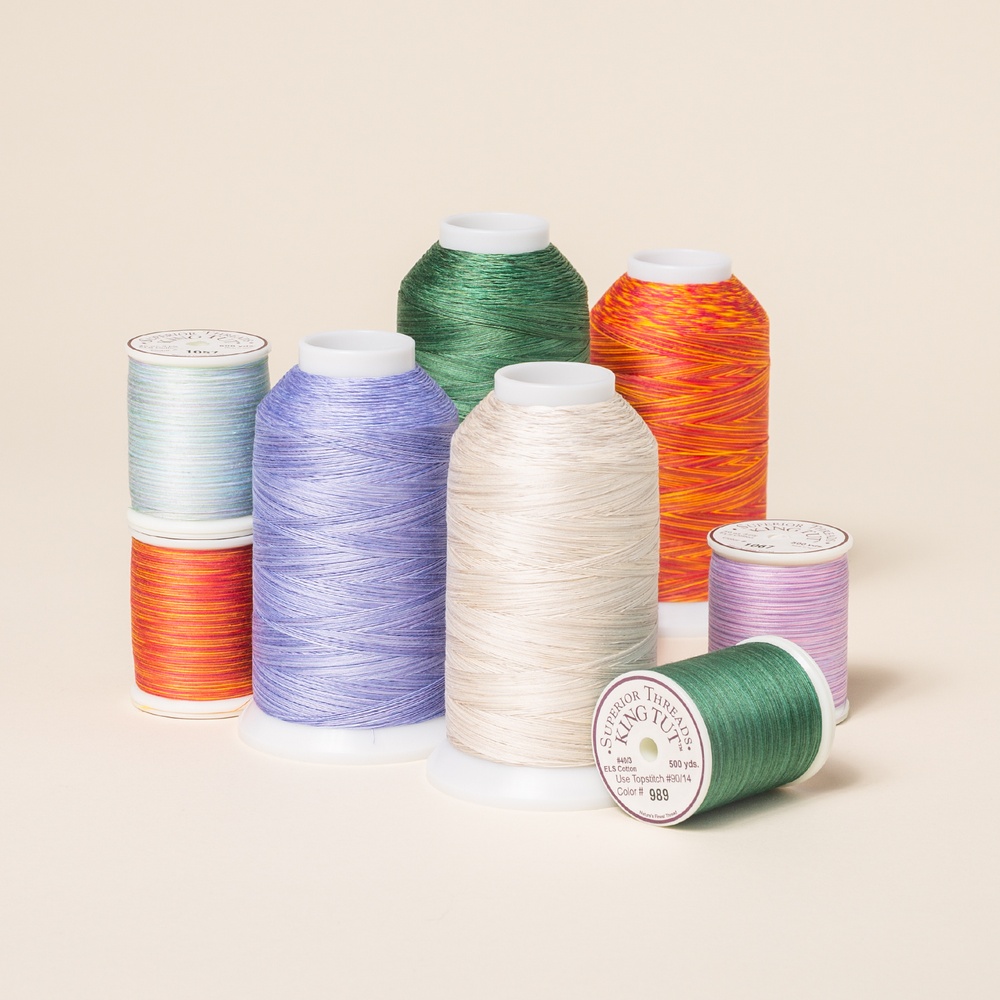
Cotton, Polyester, Nylon, and Rayon are the most common types.
Cotton
Cotton is a natural fiber with average strength and mid to low sheen. Short pieces of cotton (staples) are wound together to create thread. Cotton thread is mostly used for sewing and quilting.
Polyester
Polyester is a very strong, smooth synthetic fiber that can have high or low sheen. It is good for construction and decorative stitching.
Rayon
Rayon is a synthetic fiber with high sheen. It is not as strong as other fibers so it is usually reserved for decorative stitching like embroidery.
Nylon
Nylon is a synthetic fiber that is strong, smooth, and lint free. However it does melt when subjected to high heat and can discolor when exposed to the UV of the sun. It is often used to create "invisible" and textured motifs in quilting.
Understanding Thread Weight
Weight is how strong the thread is and how visible the stitched line will be. This is important because sometimes we want the stitching to be invisible and sometimes we want it to stand out.
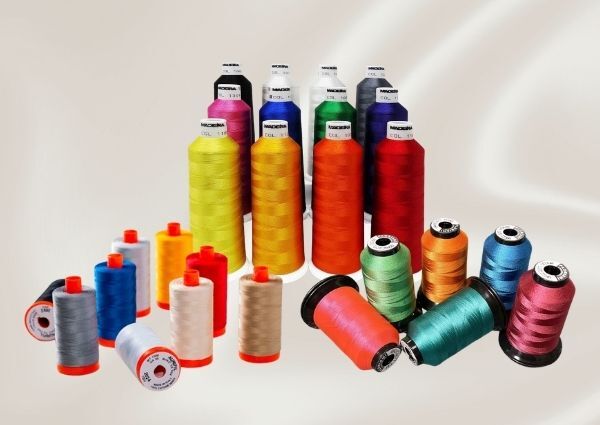
Thread weight is measured from light (fine) to heavy. The numbering can be confusing because as the weight number gets bigger the thread gets finer. For example 100wt thread is very light (fine) where 12wt thread is very heavy (thick).
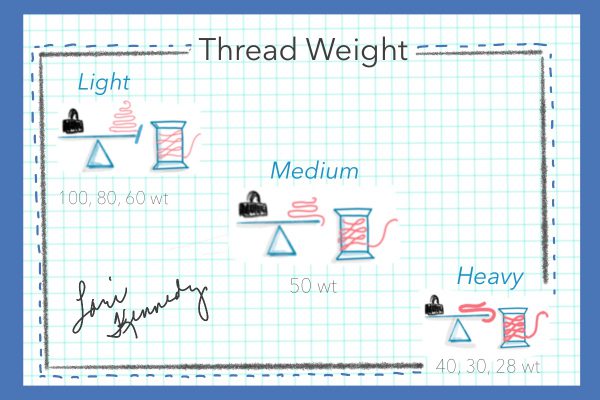
Thread is measured on a fixed weight system, a fixed weight is placed on one side of the balance, then the thread is unspooled until the scale is balanced and the length is measured. This is called the thread weight but its actually the length! It takes a longer piece of thin (fine) thread than heavy (thick) thread to balance the scale. Heavy thread is stronger, bulkier and more visible than lighter weight thread.
- If you want to see the thread use a heavy weight thread (40, 30, 28wt)
- If you want the thread to be less visible use a light weight thread (60, 80, 100wt)
- For piecing and construction, choose a weight that is strong but not bulky (most quilters use 50-80wt)
There is not a standard for measuring weight across manufacturers, so when choosing thread make sure you look at the weight on the spools label (WT, NE, or TEX). Each company uses their own standard so a 50wt from one company might not look exactly the same as a 50wt from another comapny.
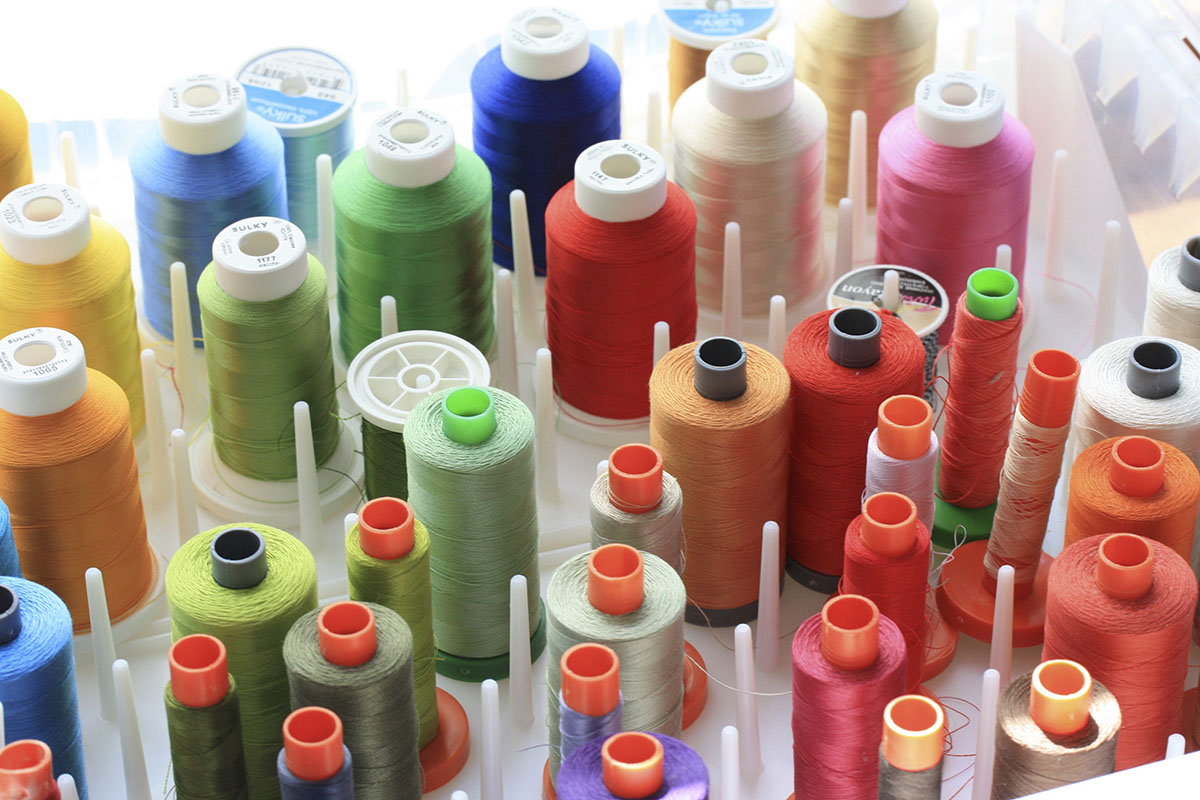
Next time you go thread shopping remember these tips!
Check out the many brands of thread we offer here!
Thank you to Bernina's Blog - We All Sew for the inspiration!