

Posted by Tammy on 10th Jul 2026
Bobbin Basics - Prewound Bobbins
Have you ever stopped and really thought about your bobbin? Your bobbin is a very important part of your sewing project. Without it there are no stitches! But the truth is bobbins are your last line of defense for that perfect stitch.
Let’s get to know about your bobbin.
Before you wind anything, you want to make sure that you have the right size and type in your machine. There are many types of bobbins available so be sure to refer to your owner’s manual or you can always chat with us to determine the right size and type for your machine. A good rule of thumb is to keep one of your original bobbins handy and then when you order you can compare.
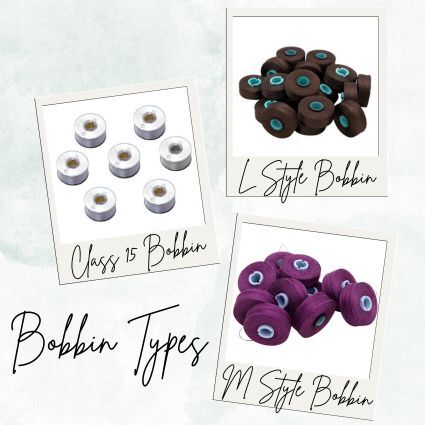
Here are some of the most common types of bobbins:
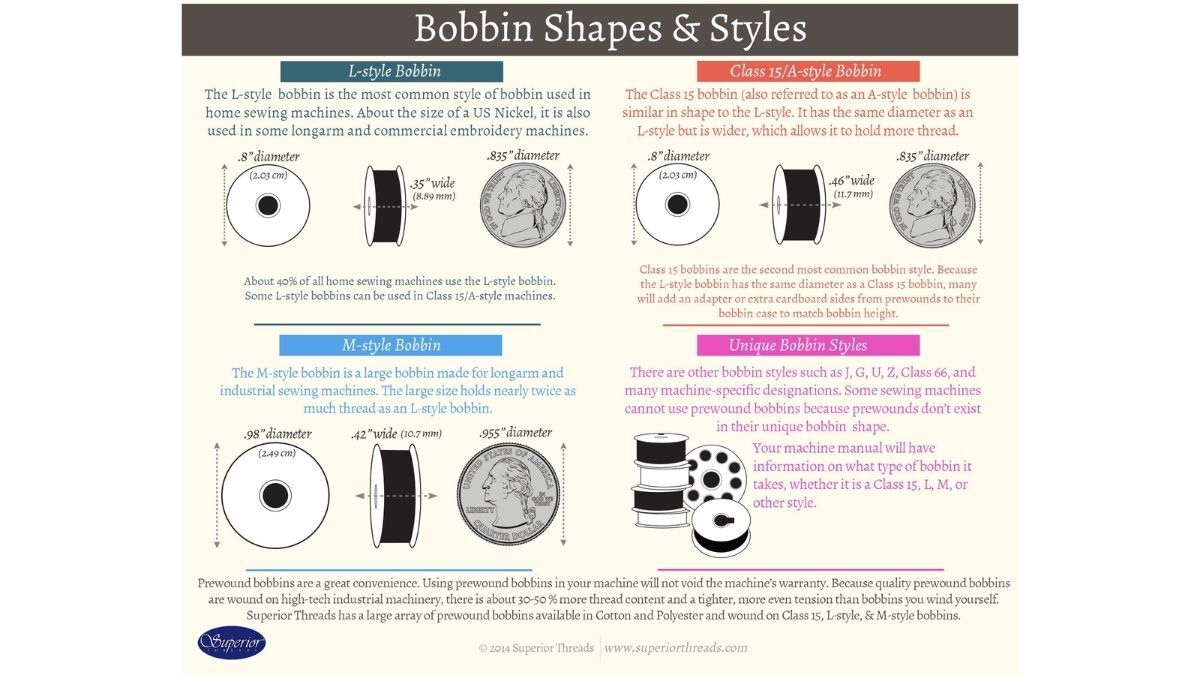
Style L is a standard, flat-sided bobbin commonly used in commercial multi-needle embroidery machines and many industrial straight-stitches or some home sewing machines.
Style A or Class 15 are different names for the same widely used standard-sized sewing machine bobbin. They are roughly the size of a nickel (13/16 inch in diameter and 7/16-inch-deep) and feature flat tops and bottoms. They are universally compatible across most modern and vintage home machines.
Style M bobbins are heavy-duty, high-capacity bobbins holding nearly twice the thread of standard home bobbins. Measuring roughly 1 inch (25mm) in diameter, they are primarily used in longarm quilting machines, commercial embroidery machines, and heavy-duty industrial sewing machines to minimize interruptions.
If that’s not enough, you also have the option of a Pre-wound bobbin!
Why use a pre-wound bobbin over one you wind?
One main difference between pre-wound bobbins and those you wind yourself is that a pre-wound bobbin can hold 30-50% more thread than one you wind. This extra thread leads to fewer bobbin changes. Also, because the thread is wound on at the factory there is more consistency with how much thread is on each bobbin. Factory wound bobbins create better stitches because the wind is more consistent than on self-wound bobbins. This, in turn, makes the tension of the thread more consistent as it comes off the bobbin, which improves the stitch appearance and the bobbin tension.
In my opinion the biggest reason to use a pre-wound bobbin is that it is just easier. It not only saves you time in the threading and prep work to begin your project but they can also save you money as you won’t need to have a stash of empty bobbins around!
Hopefully you learned something new about bobbins. If you want to give them a try, we have many options for you at this link: https://www.premierstitching.com/prewound-bobbins-3/
Again, always double check to make sure what size bobbin you are needing and order the correct one for your machine.