


Posted by Tammy on 25th Jun 2026
The Beginners Guide to the “Rule of 7” for Quilting
You tell yourself “How hard can it be”? My grandmother quilted, my mother quilted, it’s in my blood, I can do this! I happily took my trusty Janome out of the closet, cleaned her up and then stopped!! What do I do now? Where do I start? Memaw just had fabric in a basket that she grabbed and stitched together willy nilly and made some of the most beautiful and most cherished quilts that I have today! I want to do that to. She always looked so relaxed sitting in her chair with her needle and thread sewing on that binding and signing her name to the bottom! I really, really want to do that!
I head to my local fabric store full of confidence, open the door and stop! The selection, colors and shear quantity overwhelmed my senses! I have no idea where to start! I have no idea what looks good together! How much do I need? These are the first questions that went thru my head! Thank goodness I stumbled into a seasoned quilter in the store. I kindly explained my situation and her response was just follow the “Rule of 7” until you get some time under your chair! I thought great that sounds fantastic! What is the Rule of 7? Let me explain!
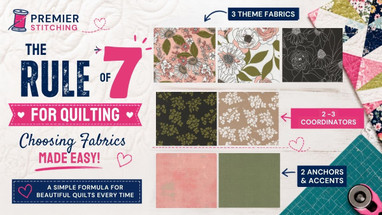
The "Rule of 7" in quilting typically refers to a fabric selection guideline used to create visually appealing, high-contrast quilts. It suggests building your project with roughly 7 distinct fabrics, moving from large-scale theme prints down to smaller-scale accents.
For beginners looking to build a beautiful and cohesive quilt, the Rule of 7 breaks down into three fabric categories:
- The Theme Fabrics (Large Scale)
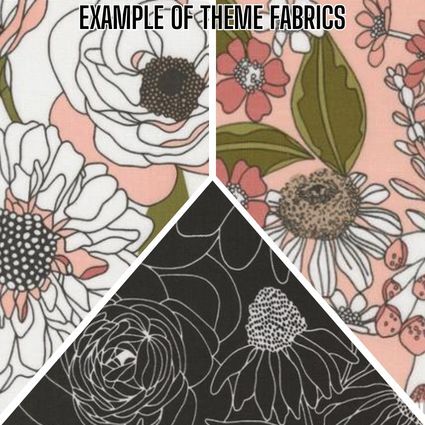
You should start your selection with about 2 to 3 large-scale theme fabrics. These dictate the overall mood, color palette, and style of your quilt. They draw the eye and give you a focal point.
- The Coordinators (Medium Scale)
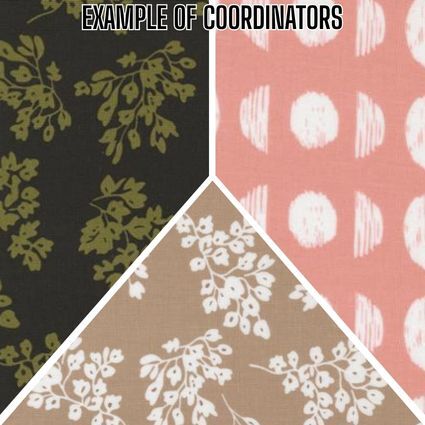
Next, select 2 to 3 medium-scale prints. These should share the same colors and tones as your theme fabrics but feature smaller, less overwhelming patterns. They act as a bridge to connect your large focal fabrics to the rest of the quilt without distracting from them.
- The Anchors & Accents (Small Scale/Solids)
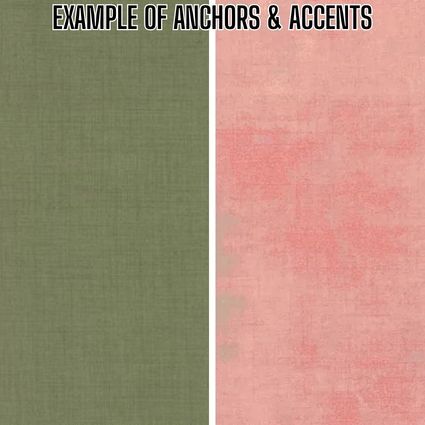
Finally, round out your collection with 1 to 2 smaller-scale prints or solids. These provide necessary rest for the eye and help establish excellent contrast throughout the overall design.
I found a pattern (that’s another whole story!) followed the rules and purchased my 7 fabrics, went home, did some cutting, stitching and low and behold I did it! I completed my first quilt! Was it perfect? No. Did everything line up correctly? No. Was I relaxed? Somewhat, sometimes! Maybe this was what my seasoned quilter referred to as some time under my chair!
I have, since this first foray into quilting, completed several more quilts, took a few classes, listened to the people before me who have the time under their chair and learned tons! Am I a seasoned quilter now? Most definitely not! I am still a novice beginner. I accept that. Are my quilts perfect? Nope but I am getting better. I just need more time under my chair!
To sum it up, I am totally hooked! I still to this day use the Rule of 7. It has saved me hours in the quilt store agonizing over where to start! I do feel more confident when I go to pick out my next project. And honestly, I am starting to feel more relaxed. Maybe, I am finally getting to the right amount of time under my chair!!