


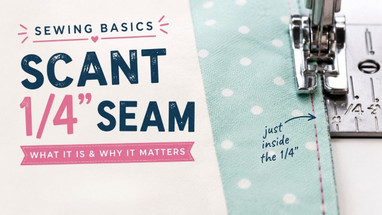
Posted by Tammy on 6th Aug 2026
To Scant or Not to Scant
How can one small word cause such a huge debate and such controversy? It should be simple. Really, how much difference can it make? I am talking about the illusive scant 1/4" seam. Its the one seam that quilters strive to achive. It's highly sought after, occassionally incomprehenisible, problematic, and confusing.
In the grand scheme of things does it really matter? I really want to give you a definite answer but there are times when it doesnt!
When you are piecing a block that will be trimmed to size, your seam allowance isn't an issue, so having a slightly smaller seam allowance means you've got a little more wiggle room when squaring up the block.
This is when it matters. If your quilt has two different blocks - it might not sound like a huge problem but when you start multiplying a small fraction over many blocks, it can quickly add up to a big difference at the end.
The reason we use a 1/4" seam allowance is simply this - it's easier than using a 3/8”" seam allowance. We need to be able to fit pieces together precisely. Since most pieced quilt blocks are based on geometric shapes, it quite simply is a math thing. Having a consistent seam allowance made piecing easier, and so much easier to cut after the invention of the rotary cutter. Then when, where, how and why did a ¼” seam allowance become a scant ¼”?
The culprits…. thread, that little space that a line of stitching makes, the thickness of fabric, and the fold when it's pressed, either open or to the side, but that’s a debate for another day. It would be too easy if it were just one single reason. All these things factor into the final measurement of your block.
Chances are that your sewing machine came with a 1/4" foot, it might even be called a “Patchwork foot”. Your machine might also have a marking on the throat plate for a 1/4" seam allowance. There's just one very tiny problem! It's probably not 100% correct. Have you measured it? I know that I have never had a reason to check mine. I always assumed that they came factory made to a precise ¼”. Low and behold when measured it was just slightly off!
Now that I knew my foot was off how was I supposed to correct it? Off to my favorite quilt store I went. I ended up at the notions wall where I spied several seam guides. I carefully read all the packages and settled on this one, the Sew Standard Seam Guide by It's Sew Emma.
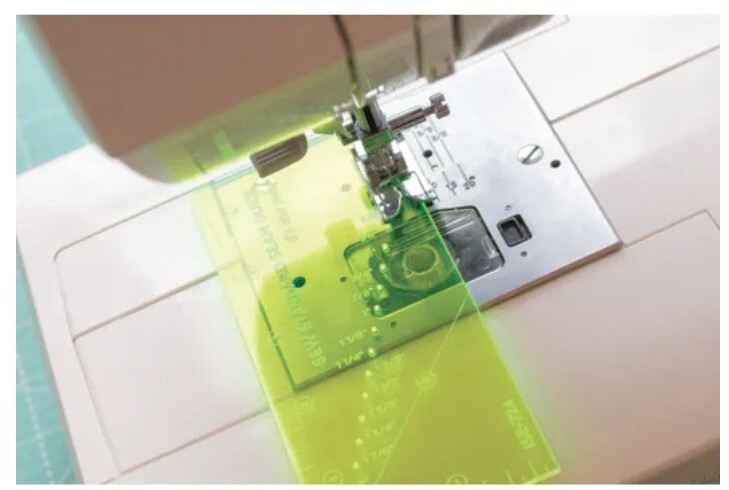
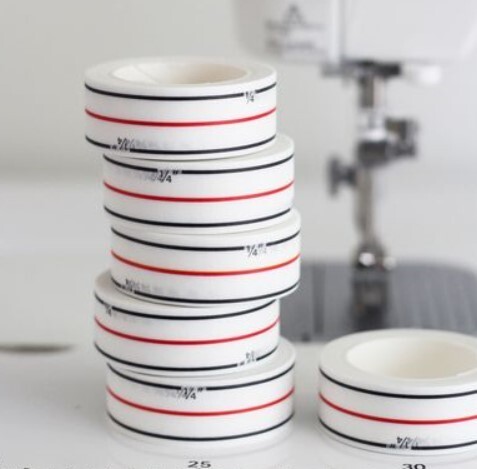
I've used this guide for years now and I still find it to be the best, fastest way to find where the perfect scant 1/4" should be on any machine. The needle is put through the hole in the guide and then the edge of the ruler can be used to mark your machine with blue painters’ tape, or a form of seam tape like:
Now I needed to test my markings, the best way I found is to cut 3 strips about 2” wide and then sew them together.
Lay a ruler on your piece across your lines of stitching. The line of stitching should be next to the 1/4" line on the ruler - not under it. Three strips cut at 2" wide should measure 5" when joined.
When asked whether we should stress and obsess about achieving the perfect scant 1/4" seam, my answer is "why”. Meaning, while a good scant 1/4" seam is essential to truly accurate piecing, it isn't the only thing to factor in. First, both layers of fabric being stitched must be accurately cut and matched up perfectly. Then the lines of stitching must be straight and even, start to finish, top to bottom. If you do all of those things and you're stitching is just inside the 1/4” mark on your ruler "perfect". If not, only you can decide if it's worth worrying about getting it more perfect.
When I am piecing, I pay attention to it, but I don't measure every piece every step of the way. If I forget to check at the beginning of my quilt, then I make sure that I am finishing my top on the same machine settings. That’s what I feel is important. Let’s face it, I’m not entering anything in a show for judging, I am quilting for relaxation and the fun of making something that I can gift to someone to brighten their day. Read your pattern it will tell you if you need a scant or whole ¼” then go for it. I've learned how to make it work, and I know when I must pull out the seam-guide, mark my machine and really work to get it right. That seam guide will cause you less frustration than a seam ripper, I’m just saying!