


Posted by Tammy on 28th May 2026
Needle Knowledge
Your needle, the overlooked, problem causing, little 2 inch piece of pointed metal, is one of the most underrated and forgotten parts of your sewing machine. Can you craft your creations without it? Nope!
Needles are important. Using the wrong ones can cause you frustration and hours of lost time. It can also cause damage to your machine, fabric and thread.
Here is some quick needle knowledge!
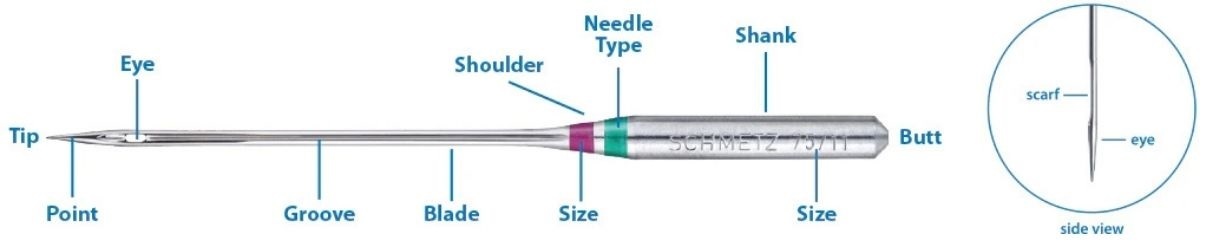
Shank: The portion that is inserted into your machine and clamped into place, usually with the flat side toward the back of the machine
Shaft: The length of needle that carries the thread down through the fabric to the bobbin
Groove: The area along the length of the shaft that allows thread to be safely carried throught the eye of the needle
Scarf: The indentation above the eye that allows the bobbin to smoothly grab the thread under the throat plate to form a stitch
Eye: The hole through which the thread is placed in order to be carried through the fabric during stitching
Point: The first area to penetrate the fabric in stitch formation. The point, tip length, shape, and size, vary according to the needle type
The basic anatomy is similar across all needles. The stark differences are more noticable when you look at the shape and size of the eye and tip of the needle.
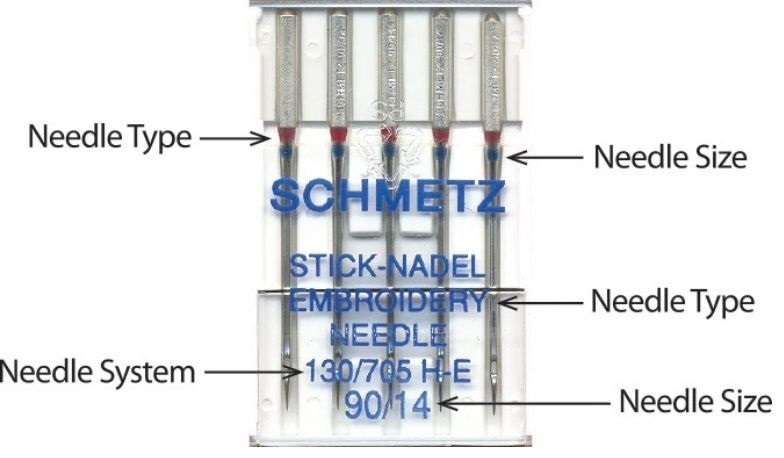
Here are some of the different kinds of needles:
Universal: The most common type of machine needle made for the domestic machine, it has a sharp tip and comes in a variety of widths for fine, medium and heavy fabrics
Ball Point: Created when sewing with knits became popular, the tip can easily slide between fibers and not cut or damage the fabric
Stretch: Made for use on fabrics with lots of stretch, the rounded tip, special scarf, and eye prevent skipped stitches
Jeans/Denim: intended for use on tightly woven fabrics with a strong sharp tip and rounded eye
Sharp: designed to be more slender and sharper than the universal needle, ideal for quilting and applique
Leather: the needle has an identifiably larger tip for piercing leather and vinyl, providing an operning large enough to cleanly carry the thread through the heavy material
Self Threading: this style can be used when the ability to thread a needle is compromised
Titanium: this needle resists sticky adhesives from basting tapes, stabilizers, and such, stays sharp up to 6 times longer than chrome needles, and greatly reduces thread breakage
Anti-Glue: the needle is specifically engineered with an anti-adhesion coating, this prevents sticky residue from gumming up the needle shaft, groove, and eye
High Speed: the needles are engineered to handle the intense friction, heat, and structural stress of machines operating up to 1600+ stitches a minute, typically known as HLx5 needles
TIP: change your needle regularly
While I've been guilty of overusing my sewing machine needles, I've come to realize just how important they are. Not only does an old needle cause poor stitches and damage to fabric, it will also cause more expensive problems such as bobbin case damage, needle plate damage, machine timing issues, and that clicking or popping sound that comes from the hook area.
Switch to a new needle at the start of every project or after approximately 8 hours of sewing. Regular changes prevent needle wear that could compromise sewing quality. Needles are one of the least expensive items that will keep your machine running smoothly.
Focusing on the intended purpose of your sewing machine needle can assist you in selecting the proper one for the job. Having the right needle for your project or material can lead to a much more enjoyable sewing experience. When in doubt, change it out!